A septic system usually works quietly in the background—until slow drains, unpleasant odours or a sewage backup demand attention. For Delta homeowners and property managers with an onsite system, regular septic pumping can help prevent avoidable problems and keep wastewater moving as it should.
Pumping is a practical part of septic care, but it isn’t the whole maintenance plan. Knowing what to watch for, when to book service and how to protect your system between visits can help you look after your property with confidence.
Why septic pumping matters
A septic tank separates wastewater into layers. Solids settle at the bottom as sludge, while oils and grease rise to form scum. The liquid between these layers flows toward the next part of the system. Over time, sludge and scum build up. If they aren’t removed, solids may escape into the drain field, where they can interfere with wastewater treatment and contribute to costly damage.
Routine septic tank pumping removes accumulated material before it creates a larger issue. It can also give a qualified service professional an opportunity to notice visible concerns, such as unusual buildup or signs that further inspection may be needed. Pumping does not repair a damaged tank or drain field, so a suspected problem should be assessed separately.
How often should a septic tank be pumped?
There isn’t one schedule that fits every property. The right timing depends on factors such as tank size, household size, water use and the amount of solids entering the system. HealthLink BC recommends having a qualified person inspect an onsite sewage system regularly and notes that maintenance needs vary. Use your system’s records and a professional’s advice to set a schedule that suits your property. HealthLink BC’s maintenance guidance offers more information.
If you don’t know when the tank was last serviced, it’s sensible to arrange an assessment rather than wait for symptoms. Keep a record of pump-outs and inspections so future service can be planned around the system’s actual history.
Signs it may be time to book service
A full tank isn’t the only reason to investigate a septic issue. Watch for:
- Drains or toilets that are slow across the property
- Gurgling sounds in plumbing
- Persistent sewage odours indoors or outdoors
- Wet, unusually green or spongy areas near the tank or drain field
- Sewage backing up into a toilet, sink or floor drain
These signs can have different causes, and pumping alone may not resolve them. If wastewater is backing up or surfacing outdoors, limit water use and contact a qualified septic professional promptly. Avoid walking or driving over a saturated drain field.
What to expect during a septic pump-out
Before the appointment, locate the tank and access covers if you know where they are. Clear a safe path so the service vehicle and crew can reach the system. If you have a property plan, inspection report or record of previous work, keep it handy.
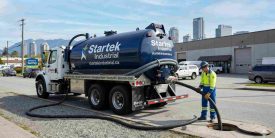
During a pump-out, the service provider accesses the tank and removes accumulated contents using vacuum equipment. Ask what the visit includes: a pump-out may not automatically include a full system inspection, repairs or a drain-field assessment. A clear explanation of the work can help you understand the system’s condition and plan any follow-up.
Protect your septic system between visits
Small household habits can support long-term system performance:
- Fix leaking taps and toilets to reduce excess water entering the tank.
- Spread laundry loads through the week instead of doing many back-to-back.
- Keep wipes, hygiene products, grease and harsh chemicals out of drains.
- Direct roof runoff and surface water away from the drain field.
- Keep vehicles and heavy equipment off the tank and drain field.
- Ask a qualified professional before using additives or making changes to the system.
Septic pumping in Delta: plan ahead
If your property relies on an onsite sewage system, don’t wait for a backup to think about maintenance. StarTek Industries provides septic pumping services; contact the team to discuss your location, access, system history and service needs. A timely conversation can help you plan the next step before a small concern becomes a disruptive repair.
Frequently asked questions
Is septic pumping the same as a septic inspection?
No. Pumping removes accumulated contents from the tank. An inspection assesses system condition and may identify concerns that need further attention. Ask what is included when booking.
Can I wait until there’s an odour or backup?
It’s better to plan service using the system’s history and professional guidance. Odours and backups can indicate an issue that needs prompt assessment.
What should I do if sewage is backing up?
Reduce water use, keep people away from affected areas and call a qualified septic professional. Avoid contact with sewage and don’t assume a pump-out alone will fix the cause.
Does every property in Delta need septic pumping?
No. Some properties connect to municipal sanitary sewer service, while others rely on onsite systems. If you’re unsure which serves your property, check your property records or ask a qualified local professional.